


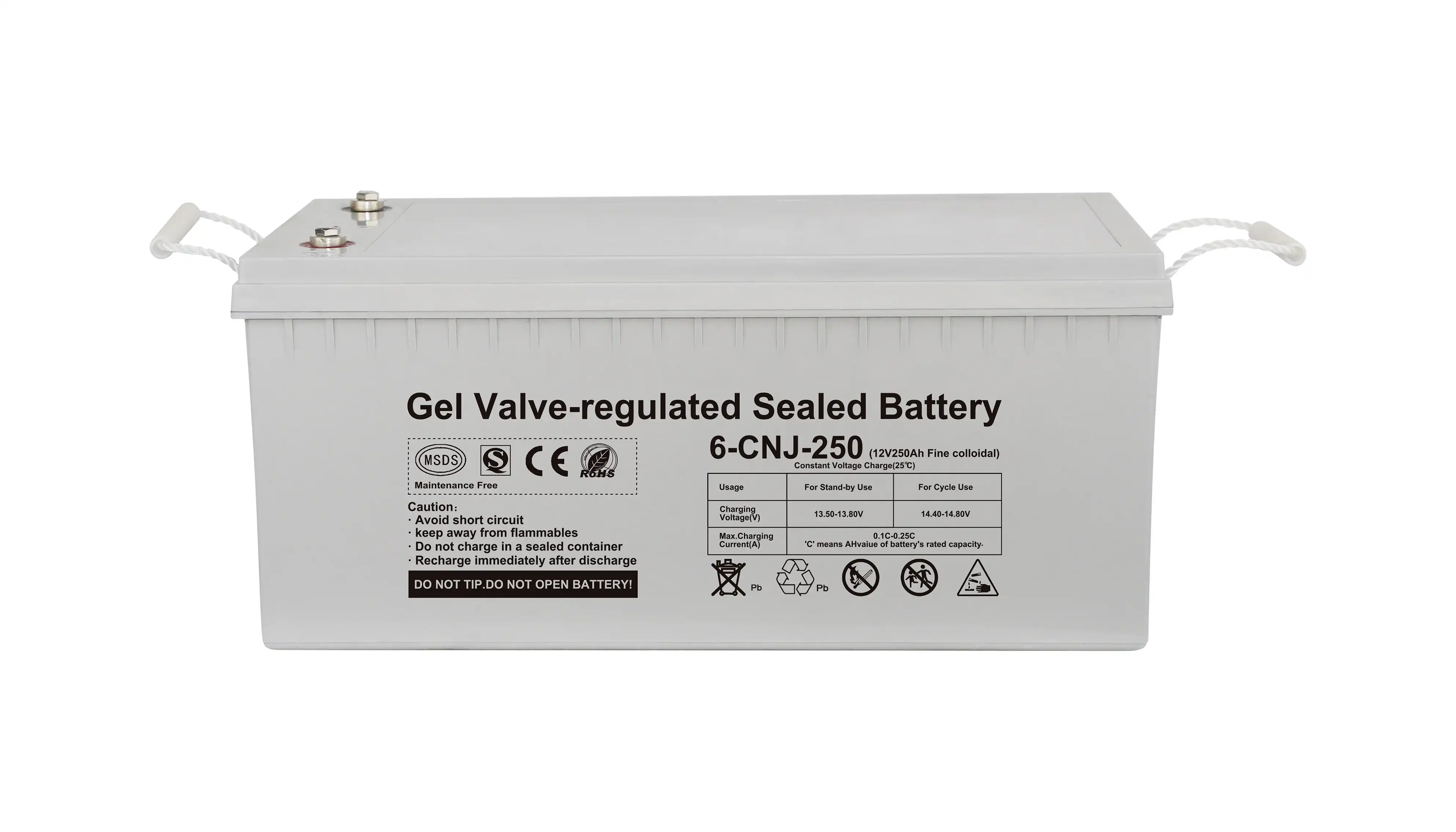
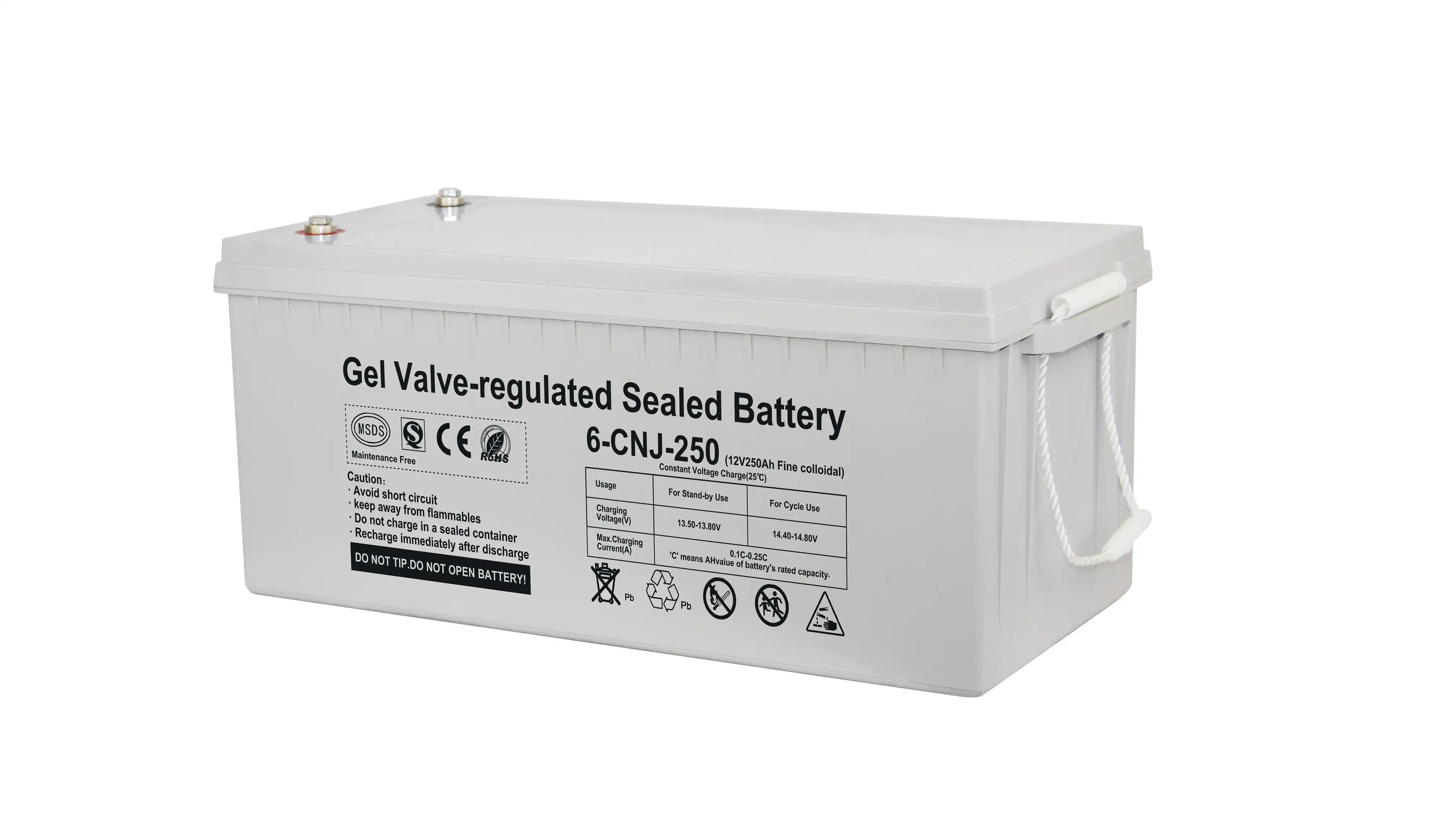
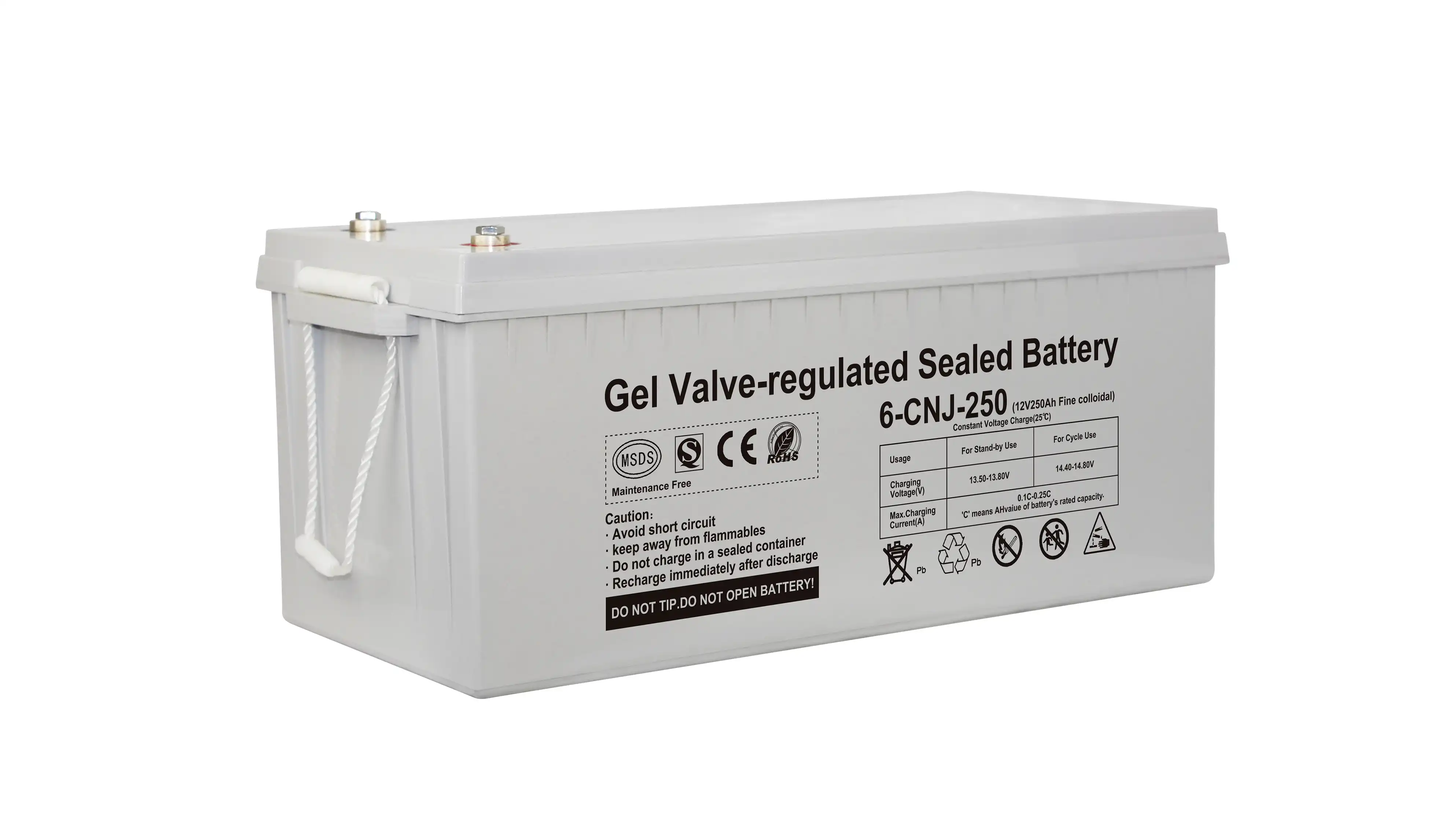
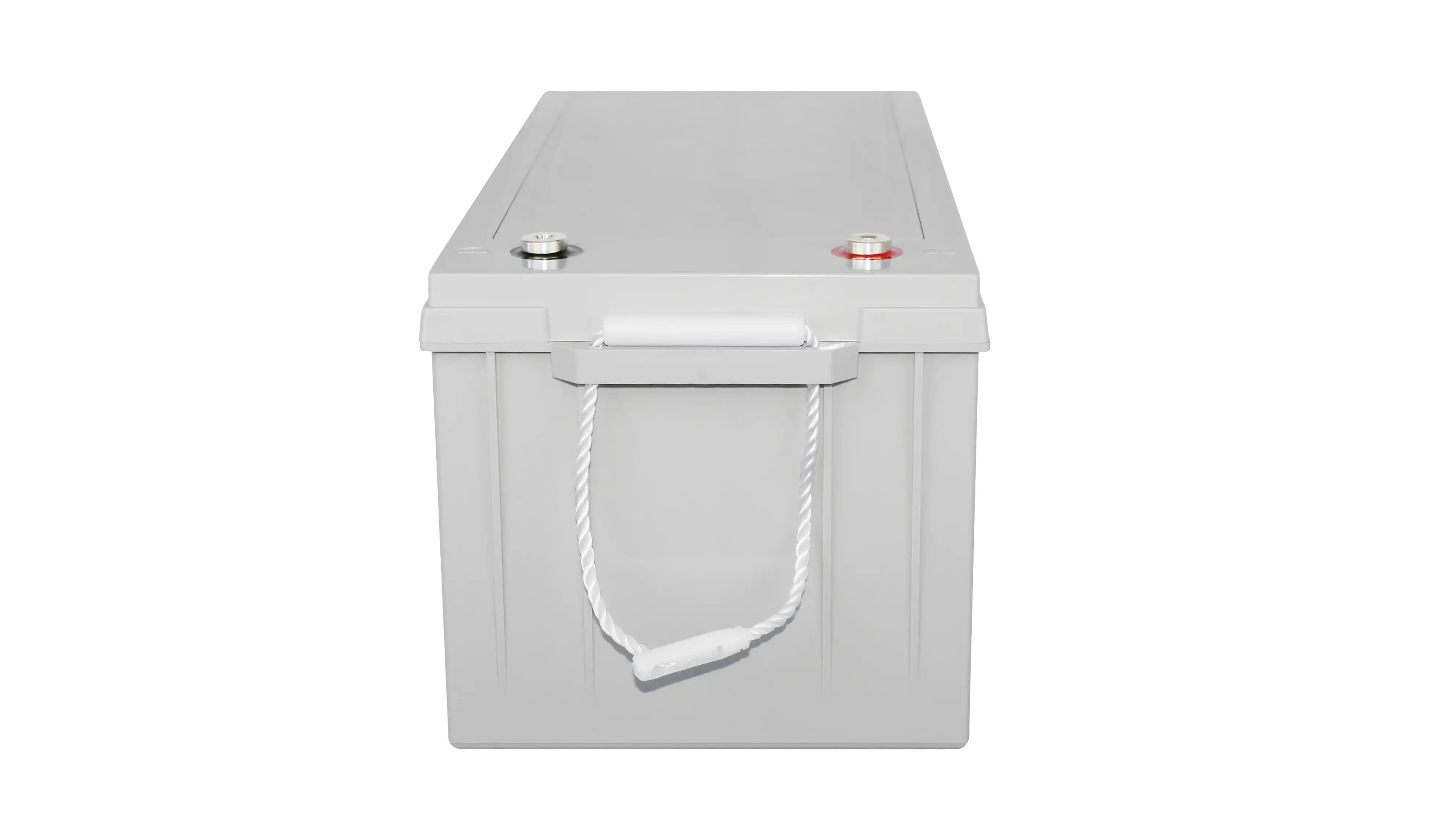
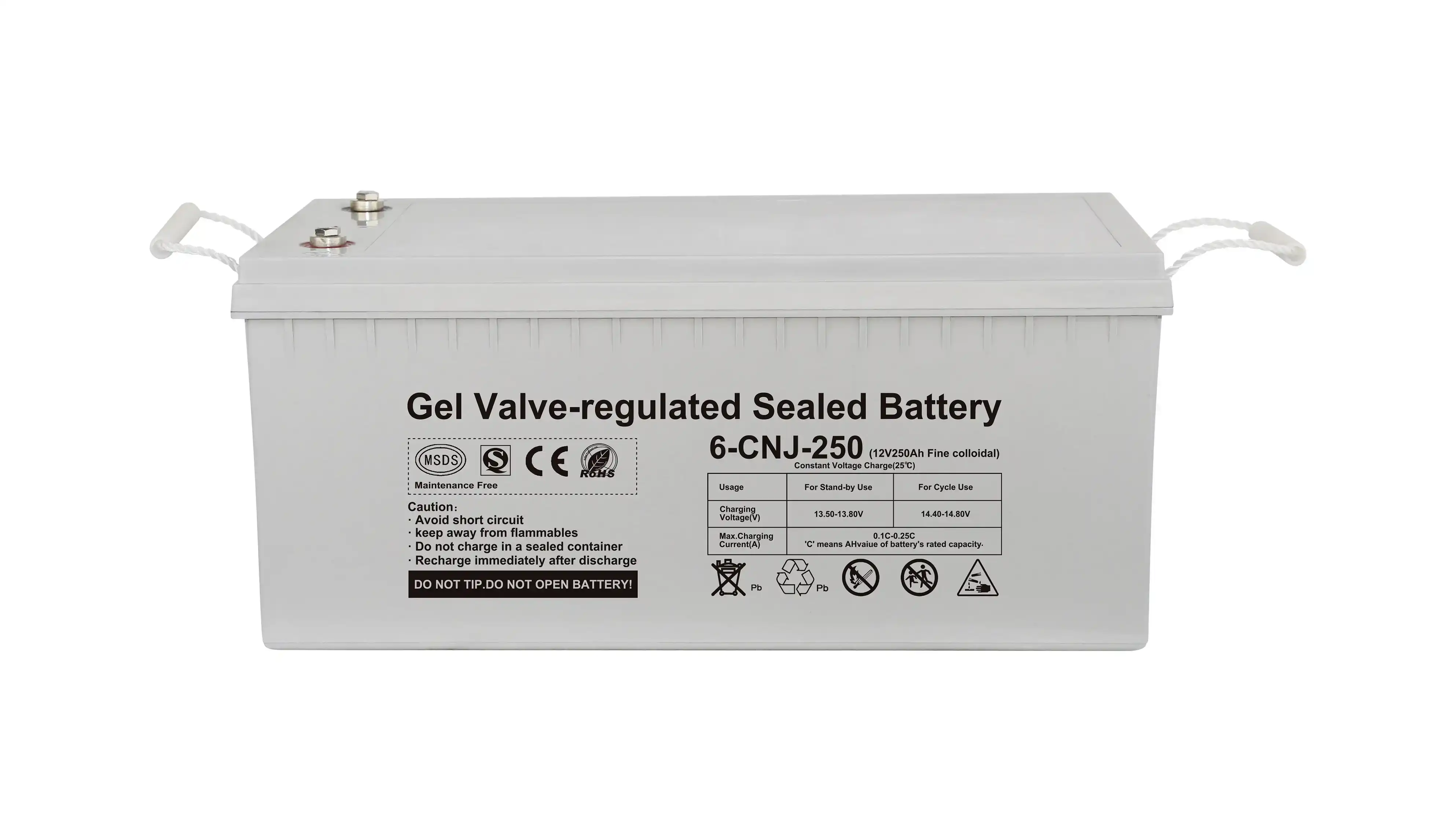
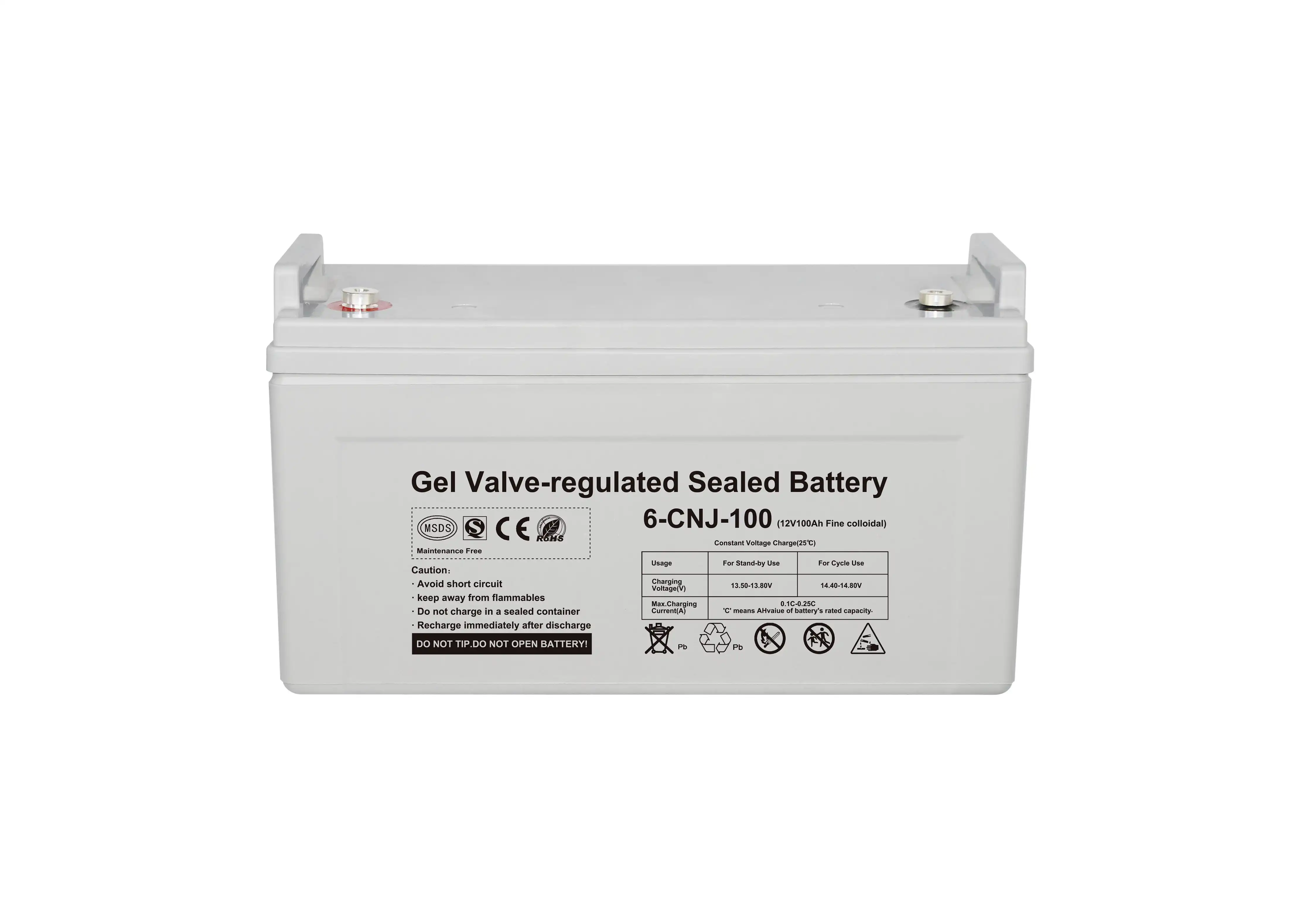
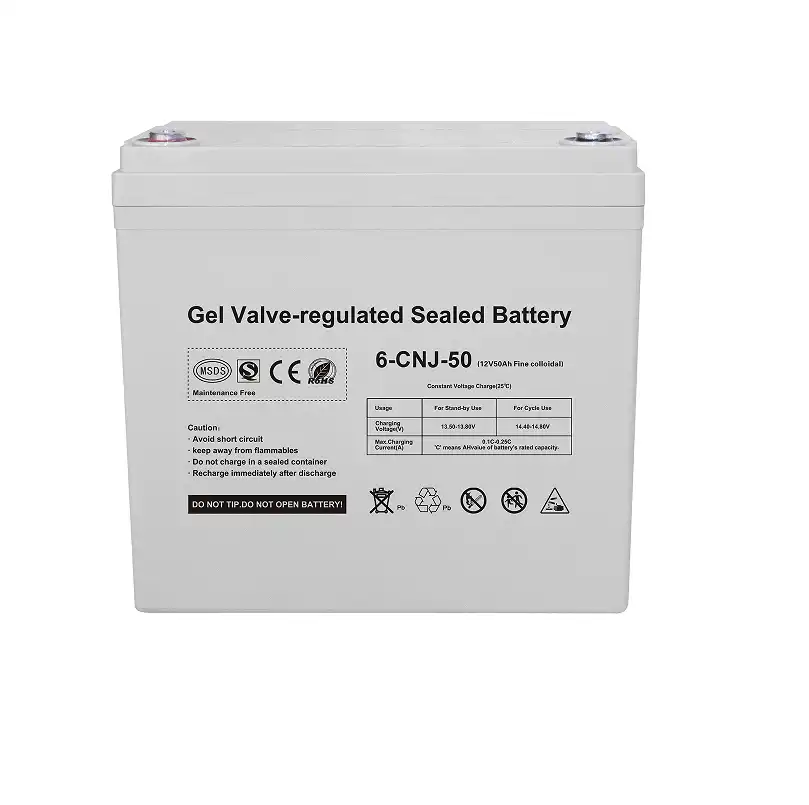
12V250Ah lead acid battery
1. Small Internal Resistance 2. More Better Quality, More Better Consistency 3. Good Discharge, Long Life 4. Low temperature resistant 5. Stringing Walls Technology Will Transport Safer.
Send Inquiry PDF DownloadProfessional 12V250Ah Lead Acid Battery - Industrial Grade Energy Storage Solution
Xi'an Gaoshide New Energy Technology Co., Ltd. presents our enterprise-grade 12V250Ah lead acid battery, engineered for demanding industrial applications. This high-capacity battery delivers 250 Ampere-hours at 12 Volts nominal voltage, utilizing advanced VRLA (Valve Regulated Lead Acid) technology with AGM construction. Our battery features ultra-low internal resistance below 3.0mΩ, ensuring exceptional discharge performance even under high current loads.
With industry-leading oxygen recombination efficiency exceeding 98%, this maintenance-free solution weighs approximately 70-75kg and incorporates heavy-duty M8 copper terminals. The Pb-Ca-Sn alloy grid technology reduces self-discharge to less than 3% monthly. Designed for both cyclic and float service, our product offers reliable backup power with dimensions optimized for standard 8D group sizing (520mm × 269mm × 220mm), making installation straightforward for your energy storage projects.
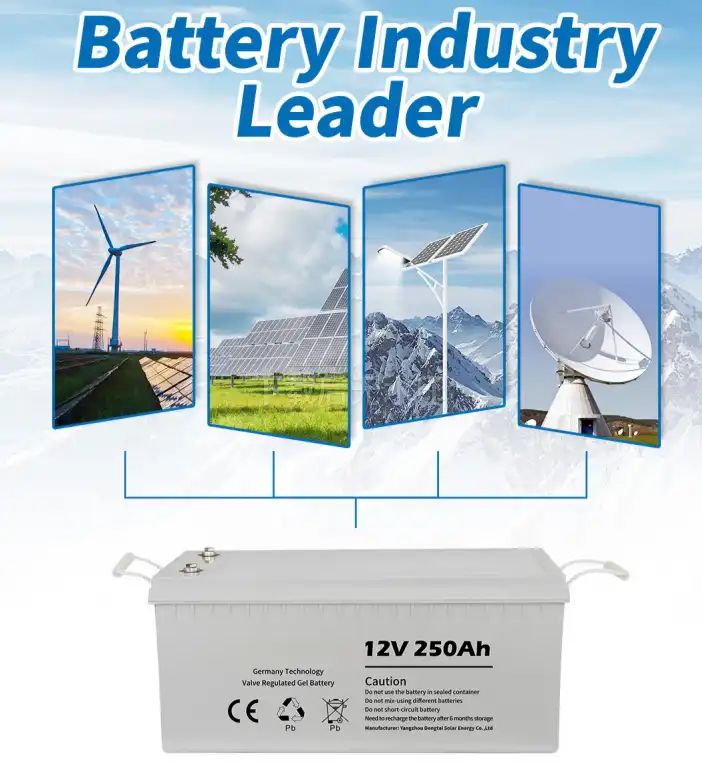
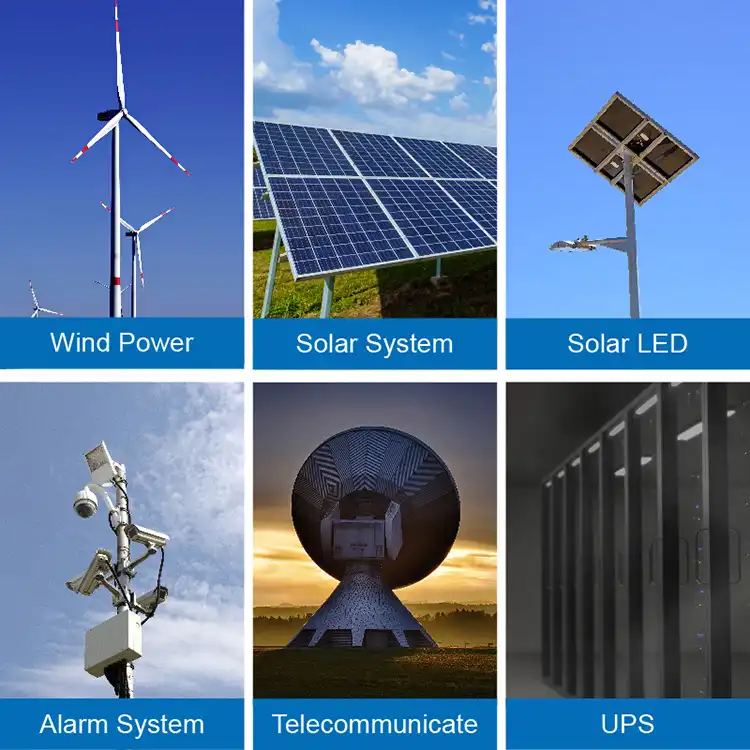
Diverse Application Solutions
Off-Grid Renewable Energy Storage
Your solar or wind power installation requires substantial energy reserves. Banks of our batteries handle daily charge-discharge cycling, storing daytime generation for nighttime consumption. The 250Ah capacity provides multiple autonomy days during extended low-sunlight periods.
System designers appreciate the simplified wiring compared to building equivalent capacity from smaller units. Fewer connection points mean reduced resistance losses and faster installation times.
Telecom Base Stations and UPS Systems
Grid instability threatens your critical infrastructure. Our product delivers reliable backup power for Base Transceiver Stations and data center UPS systems. The float service design life of 10-12 years reduces replacement frequency and total cost of ownership.
High current discharge capability ensures seamless switchover during power failures. Your equipment receives clean, stable power throughout the backup period without voltage sags.
Marine and RV House Power Banks
Extended cruising requires dependable house power without generator noise. This sealed battery withstands marine vibration and humidity while powering inverters, refrigeration, and navigation systems safely.
The 250Ah capacity supports substantial loads for multiple days between recharging. You enjoy extended off-grid capability with confidence in your power reserves.
Industrial Equipment and Machinery
Forklifts, floor scrubbers, and specialized vehicles benefit from our customizable energy solutions. The robust construction handles the demanding duty cycles of industrial environments.
Our engineering team can configure multiple units to match your specific voltage and capacity requirements. You receive tailored solutions aligned with your operational needs.
Parameters
| Parameter | Specification |
|---|---|
| Cell Per Unit | 6 |
| Voltage Per Unit | 12V |
| Capacity | 250AH @ 10hr-rate to 1.80V per cell @ 25°C |
| Weight | 64 kg |
| Max. Discharge Current | 1000 A (5 sec) |
| Internal Resistance | 3.5 mΩ |
| Operating Temperature Range | Discharge: -40°C to 50°C Charge: 0°C to 50°C Storage: -40°C to 60°C |
| Normal Operating Temperature | 25°C ± 5°C |
| Float Charging | 13.6–14.8 VDC/unit (Average at 25°C) |
| Recommended Maximum Charging Current | 25 A |
| Equalization Charging | 14.6–14.8 VDC/unit (Average at 25°C) |
| Self Discharge | Batteries can be stored for more than 6 months at 25°C. Self-discharge ratio is less than 3% per month at 25°C. Charge batteries before use. |
| Terminal | F5 / F11 |
| Container Material | A.B.S. UL94-HB; UL94-V0 (Optional) |
Superior Performance Features
Small Internal Resistance Method
Your electrical system requires an immediate response. The sophisticated plate design we employ ensures an internal resistance of less than 3.0mΩ, allowing for quick supply of current when the load is high. This property makes the battery suitable for UPS systems and inverter applications where voltage stabilisation is important.
reduced resistance means reduced energy loss when you hook up several units. Your system runs more efficiently, generates less heat and typically lasts longer.
Improved Quality & Uniformity
Each cell is rigorously tested for capacity at C10 discharge rates. We check that the actual capacity of the battery is the quoted 250Ah and not the inflated spec you get with cheaper batteries.
We match the voltage within 30mV accuracy in our manufacturing process. This precision allows for balanced performance when you set up batteries in series or parallel banks. All cells have the same internal resistance therefore there is no early failure in multi battery setups.
Outstanding Discharge Capacity & Service Life
The thick positive grids and high density active material paste make deep discharge capabilities possible. With 50-80% depth of discharge you can safely use a very good cycle life -- over 1200 cycles at 50% DOD.
Our Pb-Ca-Sn alloy grid is far more resistant to corrosion than the typical lead-antimony grids. This means that the calendar life is extended in float service applications. In standby power systems your investment is preserved for 10-12 years.
Resistivity at Low Temperature
Applications in cold climates require consistent performance. Even at 0°C our battery is still roughly 85% useful capacity to keep your vital systems powered in cold circumstances.
Sealed VRLA architecture removes the electrolyte stratification problems that plague flooded batteries. Your system will work dependably across a wide temperature range without any maintenance intervention.
Advanced Construction for Safe Transport
The high impact ABS case satisfies rigorous safety regulations. The management of the valves avoids the potential of harmful gas build-up, and the sealed design avoids the hazard of acid spills during transport and installation.
Our vibration and stress testing to IEC 60068-2-6 guarantees internal components stay secure. You have batteries ready to be used immediately in mobile or fixed applications without having to worry about transit damage.
Quality Assurance and Testing
Full Capacity Check
Production batch is tested for full C10 and C20 discharge. This check validates your battery to be the rated 250Ah in the standardised conditions. You get real capacity, not marketing bullshit.
We check the weight to ensure the lead content is correct, our batteries are always 70-75kg since that is the density of material needed for actual 250Ah performance.
High-Rate Discharge Assessment
We conduct 3C and 5C surge testing for internal welding integrity and terminal connections. This allows your battery to take peak loads momentarily without dropping voltage or losing connections.
This type of testing catches possible problems before they go out the door. You get batteries that have been proven ready for tough, real-world applications.
Air Tightness and Safety Valve Calibration
Safety valves lift at prescribed settings (2–6 psi) as confirmed by pressure testing. The valves are fitted to safely exhaust excessive gas in abnormal conditions, and to prevent case deformation.
This important safety element protects your installation and staff from any risks of sealed battery systems.
Internal Resistance and Matching Voltages
Customers creating battery banks can get matched sets with voltage difference less than 30mV and similar internal resistance. This matching avoids imbalance problems that greatly reduce bank longevity.
Your parallel or series arrangements work well when the current is evenly distributed across all units.
Proper Charging and Maintenance Guidelines
Charging Parameters Correct
Your battery has a range of voltages that it works best with. Bulk and absorption charging should be 14.4V-14.7V. Float maintenance should be 13.6V-13.8V at 25°C.
Temperature correction is important. Adjust voltage by -3mV per cell per degree C. Not compensating leads to overcharging in hot weather or undercharging in cold weather, both of which will drastically reduce battery life.
Best Practices for Parallel Connection
When increasing capacity, limit parallel connections to a maximum of 3-4 units. Connect the positive wire to the positive terminal of the first battery and the negative cable to the negative terminal of the last battery. This is the diagonal wiring method.
This wiring method balances the resistance of all the units such that the current draw is balanced. Your battery bank is not a bunch of fighting cells . It works as a system .
Sulphate Prevention
Crystallisation of lead sulphate crystals due to long term partial state of charge. The enormous plate surface area of our 12V250Ah lead acid battery needs regular full saturation charges to avoid hardened sulfation.
Solar users need to make sure their batteries are fully charged in the winter months when there is less sunlight. This maintenance procedure adds greatly to the capacity and length of operating life.
Temperature Effects
Capacity seems better at 30 C yet high temps increase corrosion in the grid. Battery life is cut in half for every 10°C over optimal operating temperature.
Wherever feasible, keep batteries in temperature-controlled locations. Proper thermal management preserves your investment and ensures that the stated lifespan is achieved.
Packaging and Logistics
Industrial strength packaging to preserve your investment. Each battery comes in reinforced cardboard boxes with shock absorbing foam inserts. Terminal guards are to prevent unintentional shorts during shipping.
Pallet arrangements maximise the fill of a shipping container. Our logistics team works with foreign freight providers to deliver your order safely and on schedule to your site.
FAQ
Q: What cycle life can I expect from this battery?
A: Cycle life correlates directly with depth of discharge. At 80% DOD, expect 500-600 cycles with our AGM construction. Operating at 50% DOD extends life beyond 1200 cycles. Gel variants may reach 1500 cycles at 50% DOD but require stricter voltage control.
Q: Can I mix old and new batteries in the same bank?
A: We strongly discourage mixing batteries of different ages. Performance discrepancies cause the weaker units to limit entire bank capacity. Older batteries with higher internal resistance also force newer units to overcompensate, accelerating degradation of your entire system.
Q: How does cold weather affect actual capacity?
A: Lead acid chemistry slows at low temperatures. At 0°C, available capacity drops to approximately 85% of the rated 250Ah. Plan your autonomy requirements accordingly for winter operation. The capacity returns to normal when temperature rises—this effect is reversible, not permanent damage.
Q: What causes premature battery failure in solar applications?
A: Chronic undercharging is the primary culprit. Insufficient solar generation during cloudy periods leaves batteries in partial state of charge, promoting sulfation. Size your solar array adequately and consider backup charging sources for extended poor weather conditions.
Q: Are these batteries suitable for starting applications?
A: Our batteries are optimized for deep cycle and standby service, not engine starting. While they can provide high currents briefly, dedicated starting batteries feature different plate construction for hundreds of cold cranking amps. Use our products for house power and energy storage applications.
Q: What safety precautions should I observe during installation?
A: Always use insulated tools to prevent terminal shorts. Ensure proper ventilation despite sealed construction—safety valves may release gas during abnormal conditions. Verify charger voltage settings before connecting. Incorrect charging parameters are the leading cause of avoidable battery damage.
Q: How should I store unused batteries?
A: Store in cool, dry locations between 10-25°C. Apply a refresh charge every 3-6 months to prevent sulfation. Batteries stored without maintenance charging gradually self-discharge and suffer capacity loss. Proper storage procedures preserve your inventory investment.
Partner With Gaoshide for Reliable Energy Solutions
Ready to upgrade your energy storage system with 12V250Ah lead acid battery? Contact us today at admin@gaoside.com to discuss your specific requirements.
Quick Links