


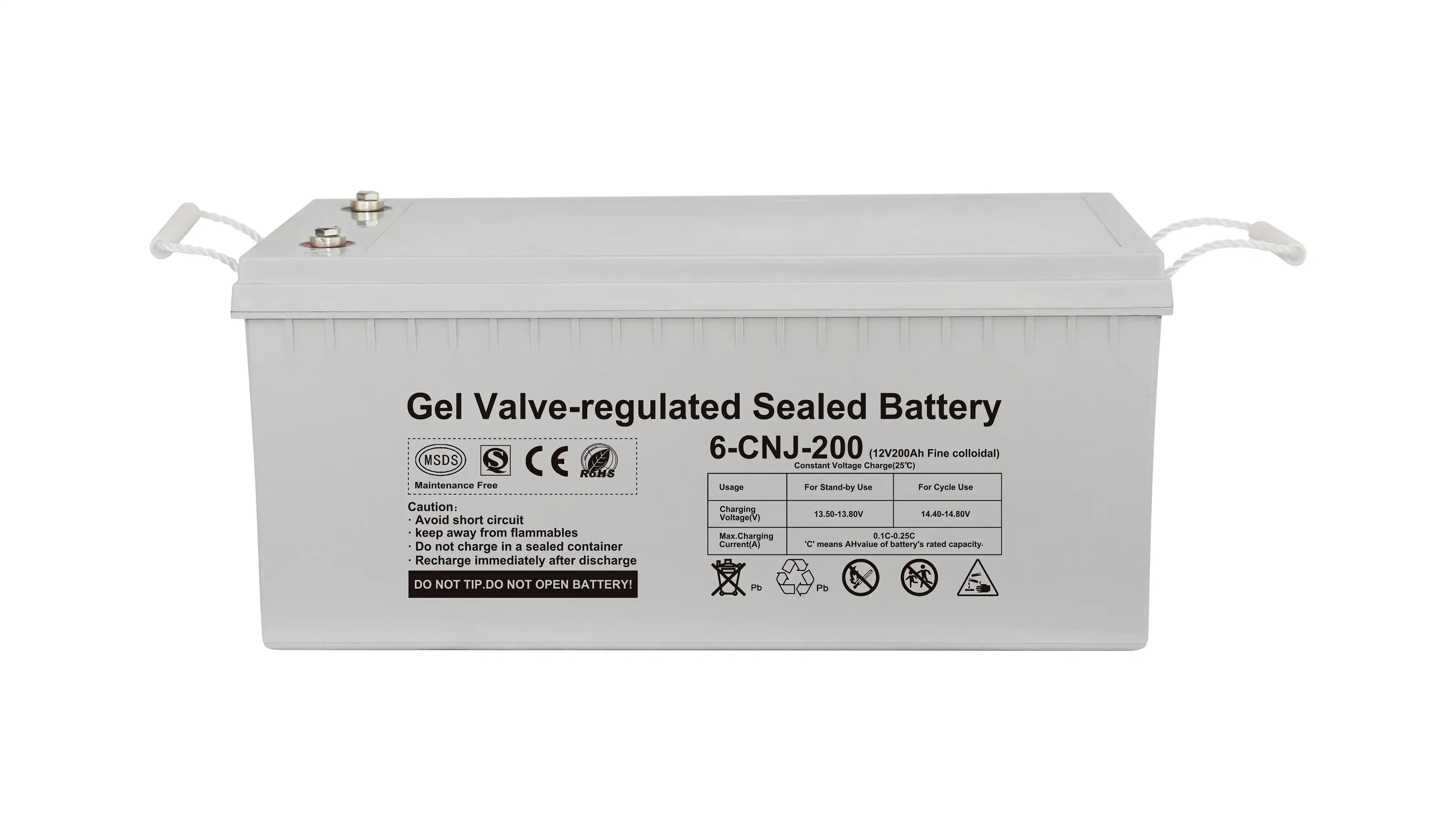
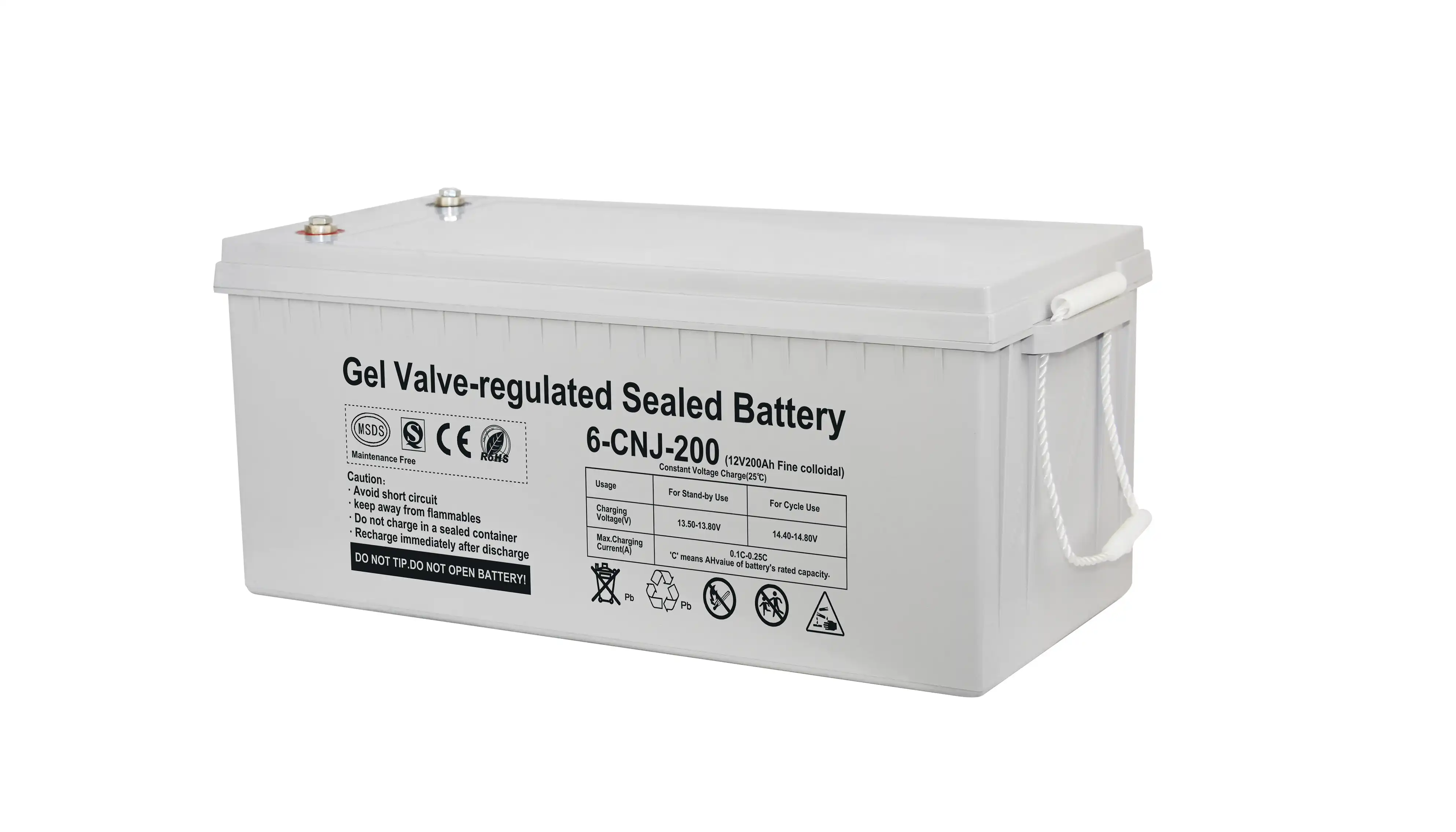
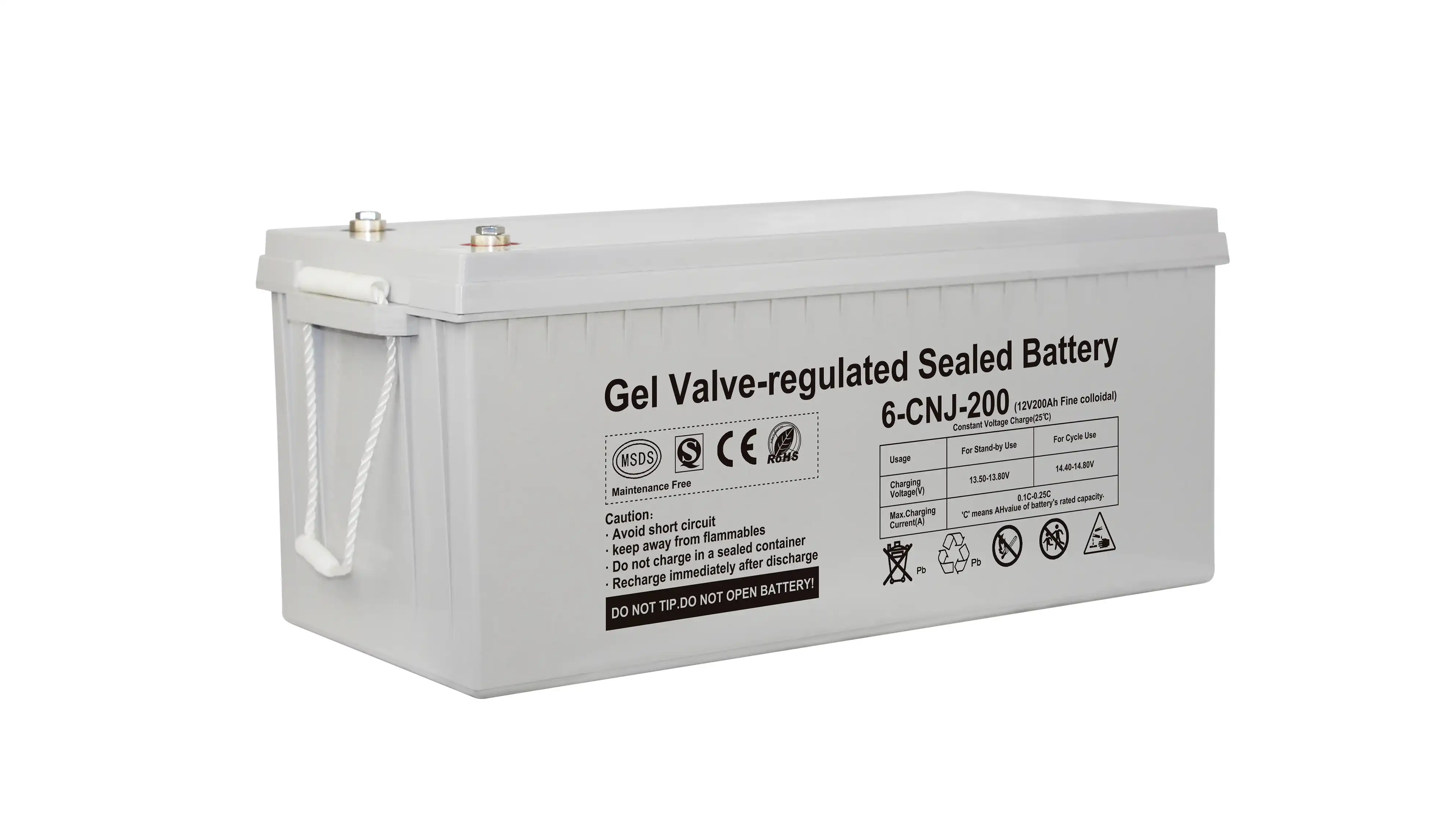

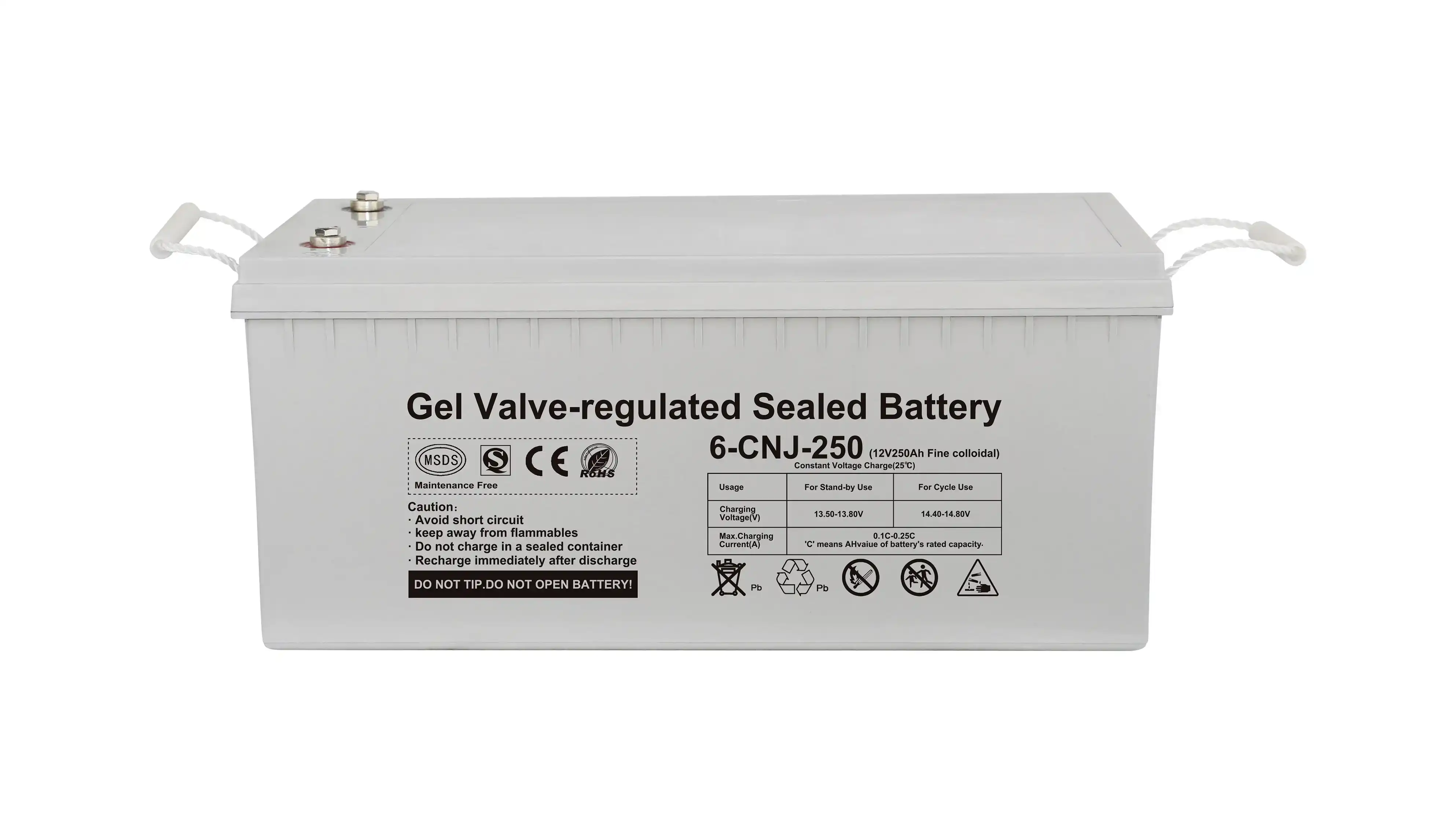
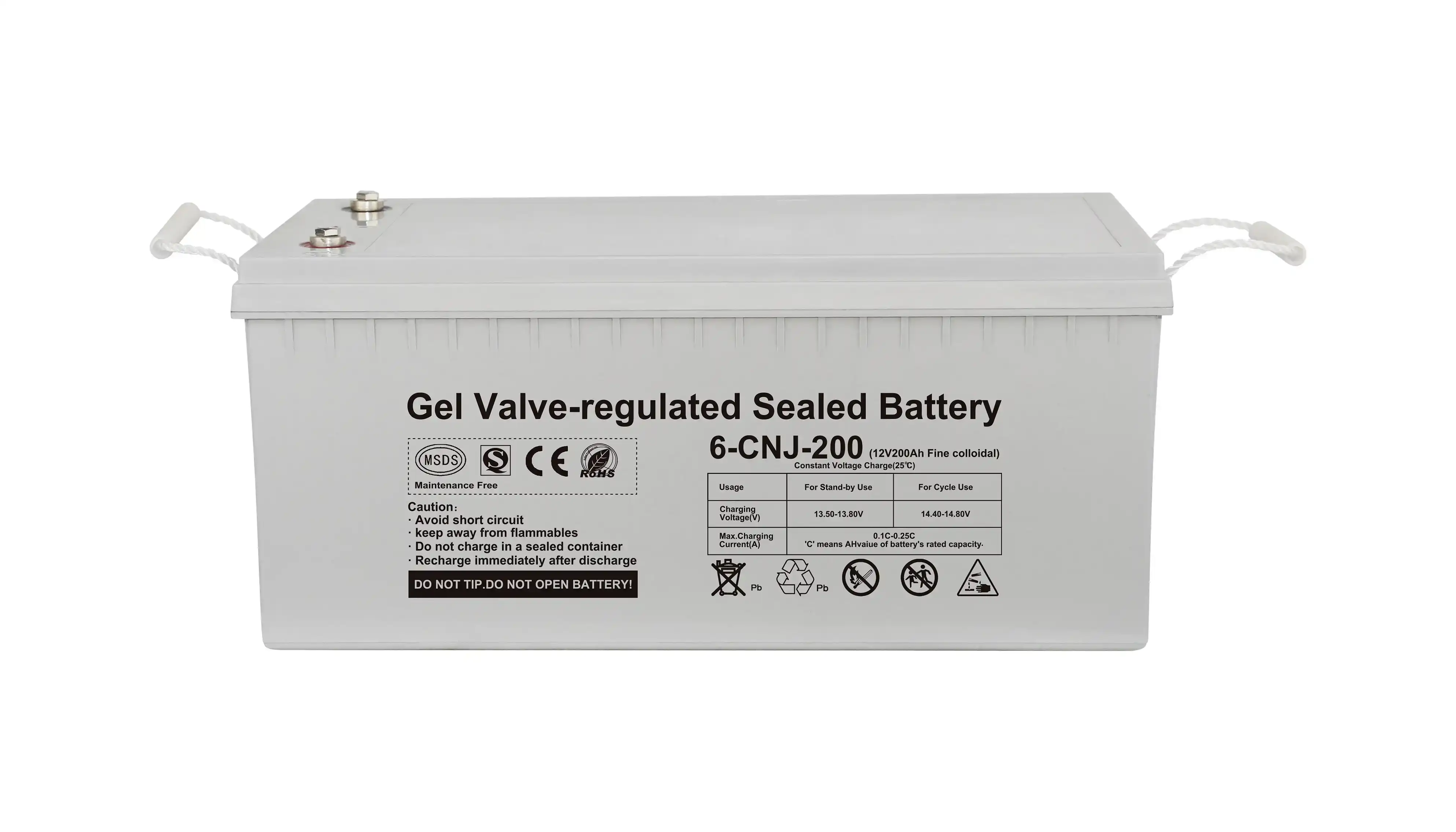
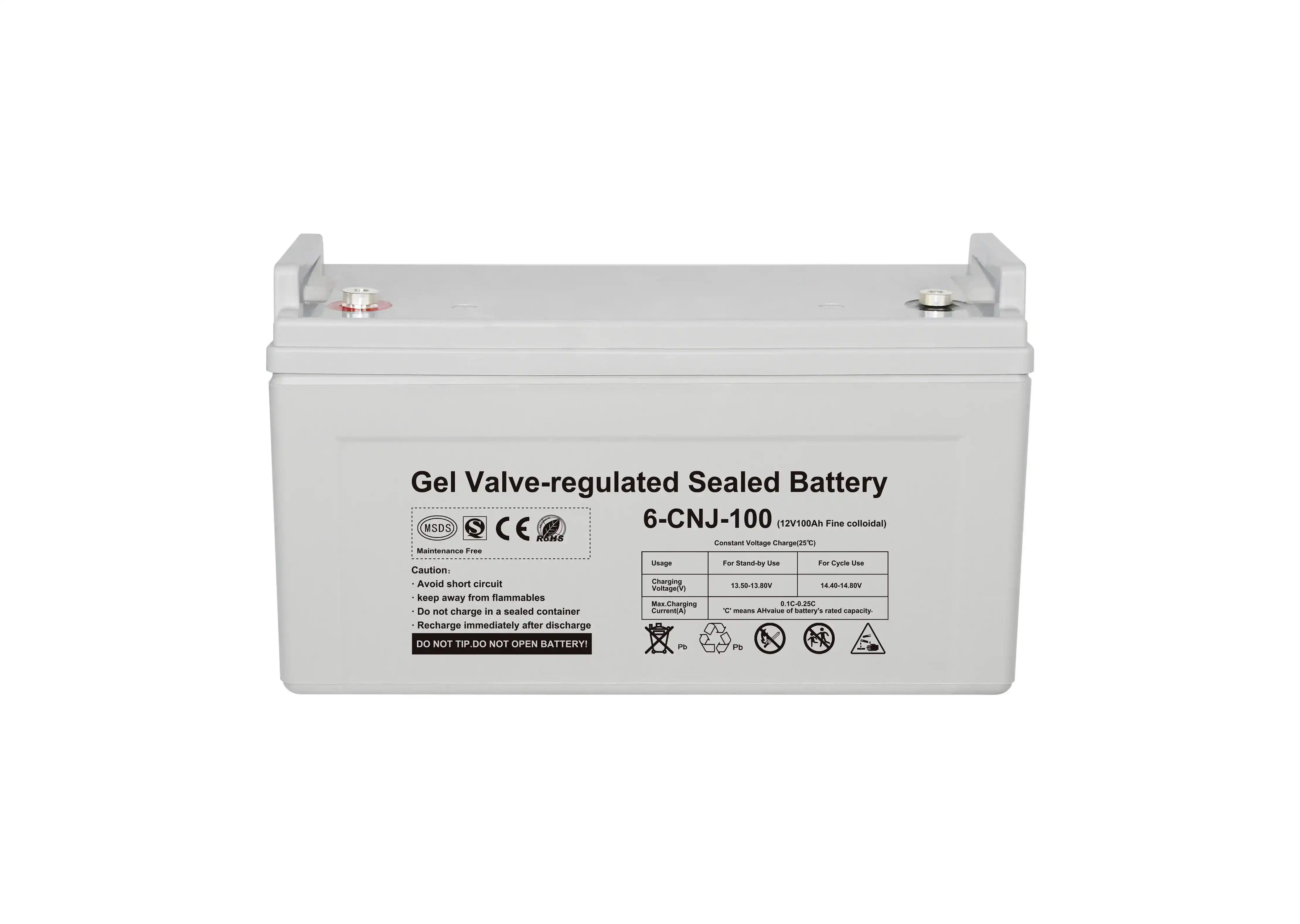
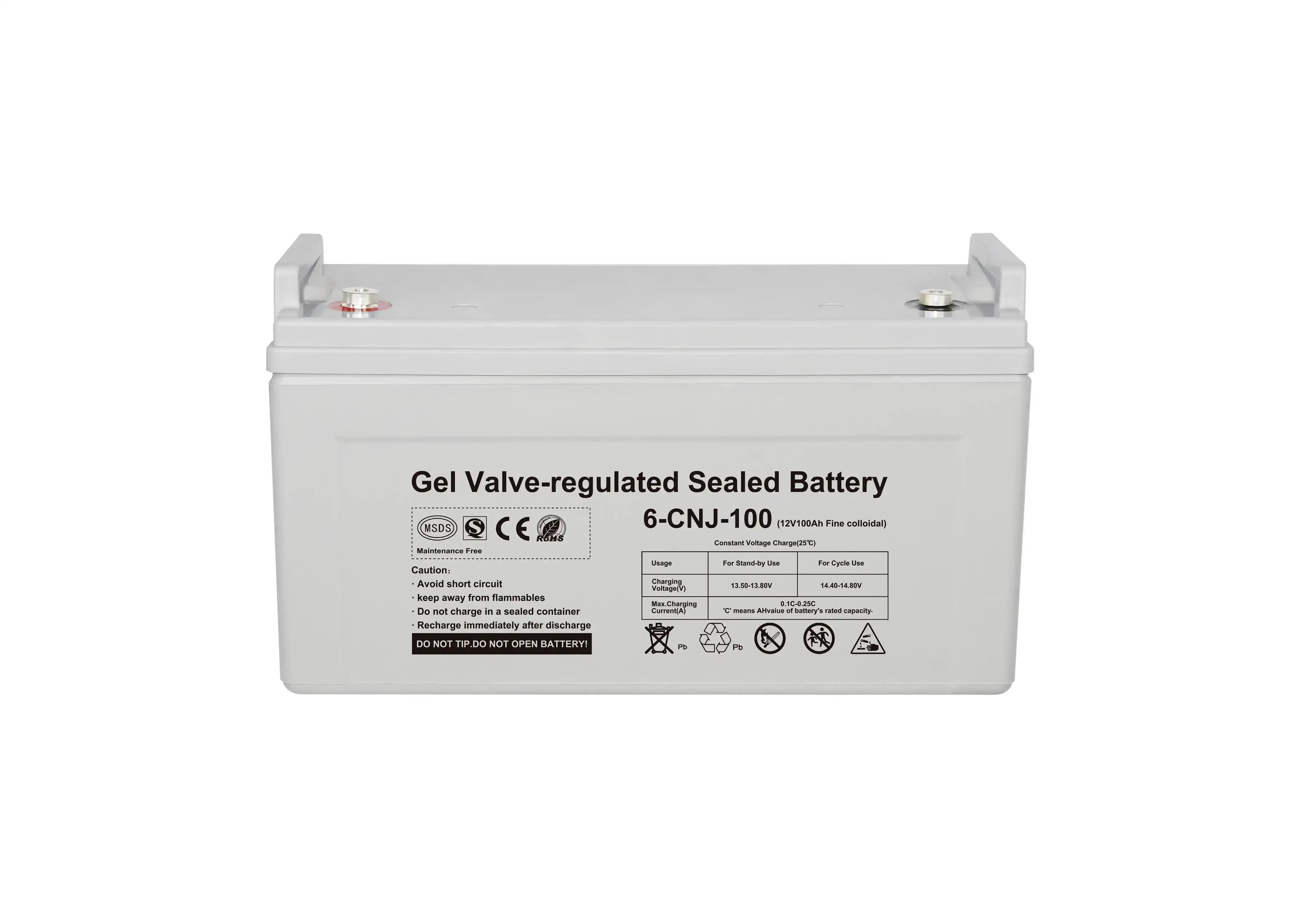
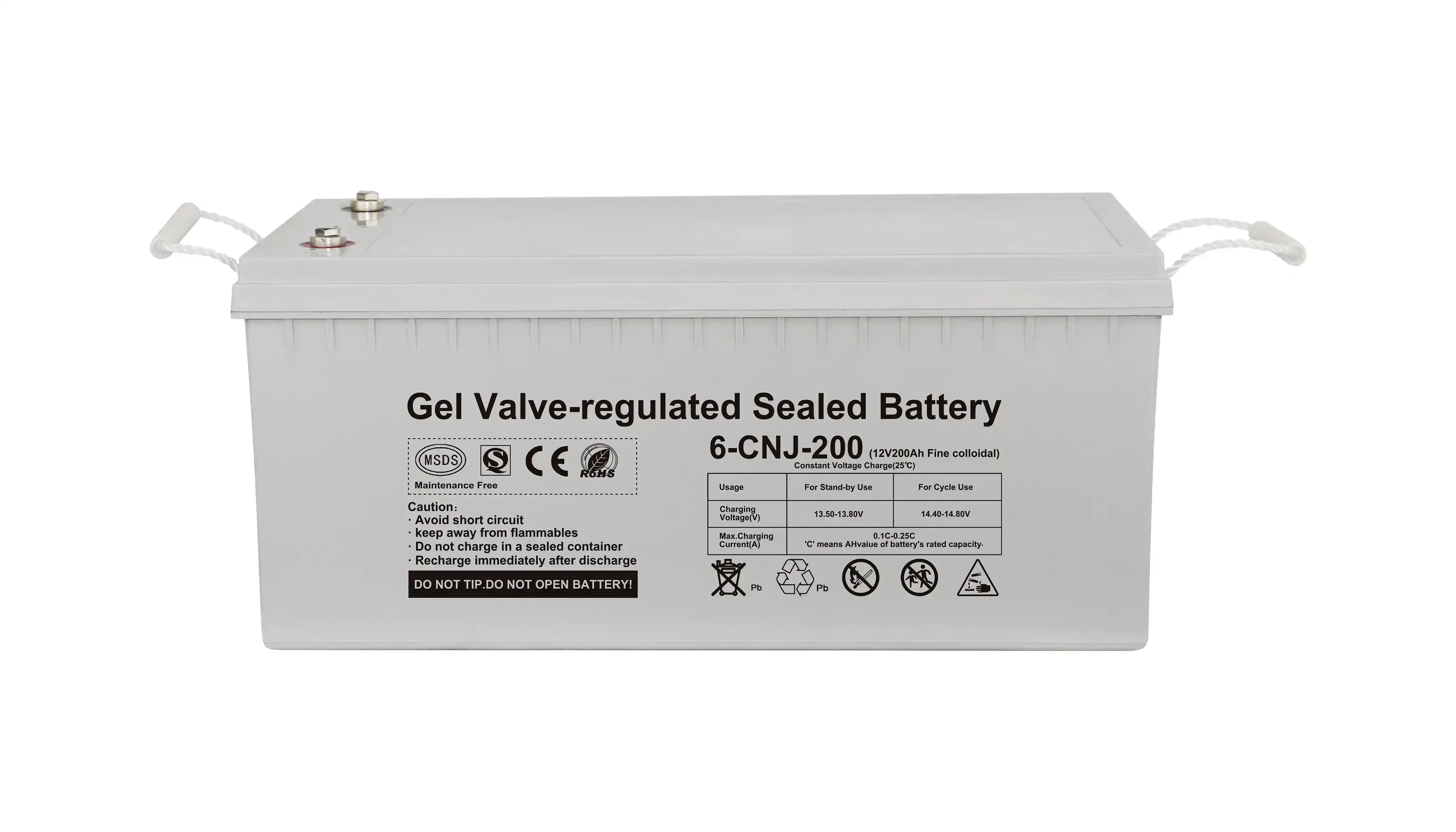
12V200Ah lead acid battery
1. Small Internal Resistance 2. More Better Quality, More Better Consistency 3. Good Discharge, Long Life 4. Low temperature resistant 5. Stringing Walls Technology Will Transport Safer.
Send Inquiry PDF Download12V200Ah Lead Acid Battery - Reliable Power Storage for Your Energy Needs
When your operations demand uninterrupted power and proven reliability, our 12V200Ah lead acid battery delivers exactly what you need. Manufactured by Xi'an Gaoshide New Energy Technology Co., Ltd, this high-capacity energy storage solution combines advanced Valve Regulated Lead Acid (VRLA) technology with robust construction. Engineered for deep cycle applications, our battery provides approximately 2.4 kWh of energy storage per unit. It features low internal resistance below 3.5mΩ, enabling exceptional surge current capabilities. With dimensions of approximately 522mm × 240mm × 218mm and a self-discharge rate maintained below 3% monthly at 25°C, this battery excels in both float and cyclic applications. The lead-calcium-tin alloy grid construction minimizes hydrogen generation while maximizing operational lifespan. Whether you're powering telecommunications infrastructure, renewable energy systems, or marine equipment, this battery offers the cost-per-kWh efficiency your budget demands.
Parameters
| Cell Per Unit | 6 |
| Voltage Per Unit | 12V |
| Capacity | 200AH@10hr-rate to 1.80V per cell @25°c |
| Weight | 56KG |
| Max. Discharge Current | 1000 A (5 sec) |
| Internal Resistance | 3.5 M Omega |
| Operating Temperature Range | Discharge: -40°c~50°c |
| Charge: 0°c~50°c | |
| Storage: -40°c~60°c | |
| Normal Operating | 25°c±5°c |
| Float charging | 13.6 to 14.8 VDC/unit Average at 25°c |
| Recommended Maximum Charging Current | 20 A |
| Equalization | 14.6 to 14.8 VDC/unit Average at 25°c |
| Self Discharge | Batteries can be stored for more than 6 months at 25°c. Self-discharge ratio less than 3% per month at 25°c. Please charge batteries before using. |
| Terminal | Terminal F5/F11 |
| Container Material | A.B.S. UL94-HB, UL94-V0 Optional |
Core Product Advantages
Small Internal Resistance
Our battery is manufactured with precision to achieve internal resistance < 3.5mΩ. This implies you get faster reaction times during load spikes. Lower resistance generates less heat and leads to better efficiency during high-current discharge.
Quality and Consistency at the Top
During production we maintain thorough quality control. Each cell is individually tested before construction. This level of detail guarantees that your battery bank is balanced in its performance across all units increasing overall system life.
Excellent Discharge Performance and Extended Lifespan
The thick plate design with high density active material paste provides a true deep cycle capability. You can get power out of it reliably without the fast depreciation you see on cheaper alternatives. In float applications, our 10-12 year design life results in fewer replacements and a cheaper total cost of ownership.
Low Temperature Resistance
Special formulation enables operation at -15°C without serious loss of capacity. Your system won't fail in cold temperatures, however it performs best at room temperature. This makes our battery excellent for outdoor applications and different climate zones.
Advanced Stringing Walls Technology
The internal dividers and bonded plate groups in our new build are reinforced. This method prevents the active material from sloughing off during shipment and installation. You get a product that is ready to go out of the box with superior vibration resistance versus industry norms.
Primary Application Scenarios
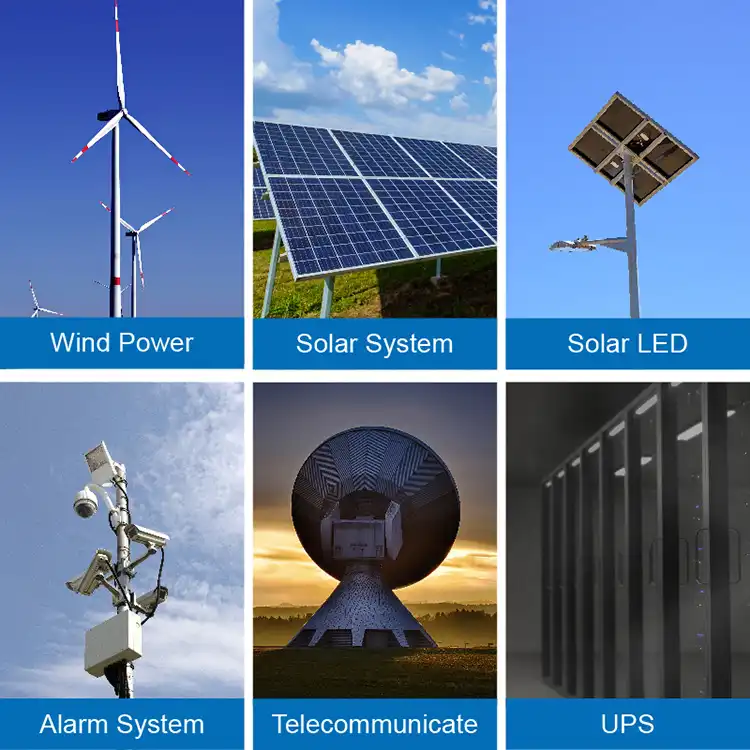
Energy Storage Systems for Renewable Energies
For your off-grid solar or wind system you need reliable energy buffering. Connect our batteries in series-parallel arrangements to create 24V, 48V or bigger banks. It is ideal for nightly household loads with its slow, deep-discharge properties. You'll keep the lights on, no compromises, on cloudy days or still nights.
Telecom & Data Center Backup
Base Transceiver Stations and UPS systems need to deliver high current instantly during grid disruptions. Our 12V200Ah lead acid battery is perfect for floating applications where it needs to be available for years. So when the grid goes down, you receive zero downtime switchover. Critical communications and servers are still running, but utility power is restored.
Marine & Recreational Vehicle Power
Our batteries are the choice of boat owners and RV enthusiasts for home bank applications. Power your appliances, lighting and GPS equipment with confidence. The bonded plate groups are resistant to rolling motion and vibration without electrolyte spilling. Tough ABS housing resists the rigours of the marine environment.
Industrial Equipment & Machinery
Reliable electricity is needed for forklifts, autonomous guided vehicles and specialist transport. Our battery provides the exact power required for inductive loads such as pumps and motors. High surge current capability handles startup requirements and guarantees voltage stability during discharge cycle.
Understanding Depth of Discharge Impact
The longevity of your battery depends a lot on how you use it. You have to understand that Depth of Discharge (DOD) establishes a non-linear relationship with cycle life.
Discharge to 100% capacity (10.5V cutoff) puts a lot of load on the battery. You'd get 200-300 cycles or so before the capacity really starts to decrease. This may be appropriate for emergency backup where cycles are uncommon.
If you limit discharge to 50% DOD you virtually quadruple your cycle life to 500-600 cycles. For daily cycling, it's a good middle ground for capacity and longevity. You obtain greater total energy during the lifespan of the battery.
But if you only shallow cycle it , to 30 % depth of discharge , you can get around 1200 cycles from the battery . You consume less capacity per cycle but the total kilowatt hours given before replacement goes up dramatically. Determine the size of your battery bank based on the daily energy consumption of your application.
The takeaway: It's cheaper in the long run to buy greater capacity and cycle shallower than to replace undersized batteries that are cycled deeply again and over.
Maintenance Best Practices
Optimal Charging Protocols
Your charging voltage must be suitable for the application type. For cyclic use, when you regularly discharge and recharge, set absorption voltage to 14.4V-14.7V at 25°C. This will ensure a full charge without overcharging.
13.5V-13.8V continuous for standby or float applications. This balances self discharge without taxing the battery. Always use a temperature correction of -3mV/°C/cell. Without this modification you are looking at thermal runaway in hot temperatures or partial charge in cold conditions.
Sulfation Inhibition
Sulfation continues to be the primary cause of premature failure in lead acid batteries. It occurs when the batteries are left in a half charged condition for a long time. Crystallisation of lead sulphate on the plates, and irreversible reduction of capacity.
Always recharge immediately after use. If your application stores batteries in Partial State of Charge (PSOC), implement periodic equalisation charging. - Maintenance charging for stored batteries, every 3-6 months or when Open Circuit Voltage goes below 12.6V.
Battery Bank Issues
Never combine old and new batteries in the same bank. Differences in internal resistance lead fresh batteries to overwork and old batteries to undercharge. So the whole investment is destroyed before its time.
Replace entire strings all at once. This increases the initial cost but greatly expands the replacement interval. Correctly matched batteries are working in concert, so you get the most bang for your buck.
Why Choose Gaoshide for Your Power Storage Needs?
Xi'an Gaoshide New Energy Technology Co., Ltd. injects decades of renewable energy know-how into each and every product. We don't just build batteries. We create full energy storage solutions.
Our technical staff offers full support from system design to commissioning. Whatever your project, whether you are designing a modest off-grid cabin or a commercial telecommunications network, we assist you optimise component selection and configuration.
We keep thorough quality control in our manufacturing. All batteries are capacity, internal resistance tested and visually inspected prior to shipping. This attention to detail means you get items that function to spec.
Our service doesn't end at the sale. We offer continuous technical support for installation, maintenance and trouble-shooting. When you work with Gaoshide, you get a resource devoted to the success of your project.
FAQ
Q: What charging equipment do I need for the product?
A: You need a charger specifically designed for lead acid batteries with programmable voltage settings. Look for models offering distinct bulk, absorption, and float stages. The charger should provide at least 20A output (0.1C rate) for reasonable charging times. Temperature compensation capability is essential for outdoor installations.
Q: How do I calculate how long the battery will power my equipment?
A: Divide the battery capacity by your load current, then apply the Peukert correction factor. For example, a 200Ah battery powering a 10A load theoretically provides 20 hours. In practice, expect 16-18 hours due to efficiency losses and voltage cutoff requirements. Always calculate based on 50% DOD for daily cycling applications.
Q: Can I use solar panels to charge this battery directly?
A: No, you need a solar charge controller between panels and battery. The controller regulates voltage and prevents overcharging. Choose an MPPT controller for maximum efficiency or a PWM controller for budget applications. Size the controller to handle your panel array's maximum current output.
Q: What causes reduced capacity in cold weather?
A: Chemical reactions slow at lower temperatures, reducing available capacity. At -15°C, expect approximately 60-70% of rated capacity. The battery isn't damaged; capacity returns when temperature rises. For critical cold-weather applications, consider insulated battery enclosures or increased battery bank size.
Q: How do I safely dispose of the battery at end of life?
A: Lead acid batteries are highly recyclable—over 95% of materials can be recovered. Contact local recycling centers or battery retailers offering take-back programs. Never dispose of batteries in regular trash. The lead and sulfuric acid pose environmental hazards. Most jurisdictions require proper recycling through authorized facilities.
Q: What warranty coverage do you provide?
A: Our batteries come with comprehensive warranty protection covering manufacturing defects and premature capacity loss. Specific terms vary by application and region. Contact us at admin@gaoside.com for detailed warranty information applicable to your project.
Contact Us for Your Energy Storage Solution
Ready to power your project with 12V200Ah lead acid battery? Contact us today at admin@gaoside.com for detailed specifications, pricing, and technical consultation.
Quick Links