


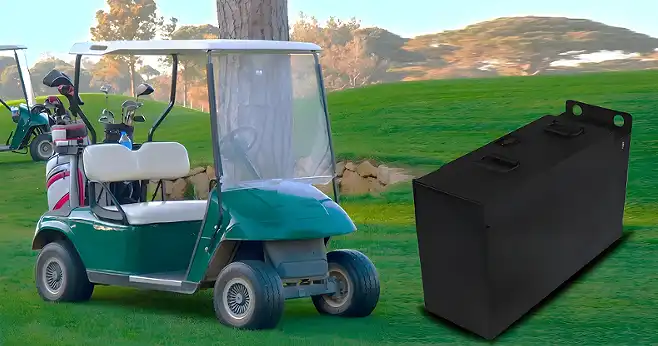
Golf cart system solutions
1. Professional technical engineer guidance
2. Rich project implementation experience
3. Customized solutions according to needs
4. Rich product categories
5, free consultation and design schemes
6. After-sales team work fast processing services
Professional Golf Cart System Solutions for Enhanced Performance and Efficiency
At Xi'an Gaoshide New Energy Technology Co., Ltd., our Golf cart system solutions deliver comprehensive powertrain integration engineered specifically for low-speed electric vehicles. We synchronize LiFePO4 battery technology with intelligent Battery Management Systems (BMS), high-efficiency motors, and advanced controllers to create fully optimized performance ecosystems. Our systems offer 3,500+ life cycles at 80% depth of discharge, providing triple the usable range compared to traditional lead-acid configurations. With energy density reaching 100-140 Wh/kg, our solutions reduce weight by 60% while eliminating voltage sag on inclines. We integrate CAN Bus communication protocols for real-time telemetry monitoring, enabling fleet operators to track State of Charge, health metrics, and geofencing data. Our products transform charging downtime from 8-10 hours to just 2-3 hours through opportunity charging capabilities.
Comprehensive System Architecture and Integration
Our powertrain solutions go beyond simple component replacement. We engineer complete ecosystems that address critical performance challenges facing golf cart operators today.
Each system combines lithium iron phosphate battery packs with intelligent protection circuits. The advanced BMS features active balancing technology that maintains cell voltage uniformity across the entire pack. This prevents overcharge, over-discharge, and thermal runaway conditions.
Our motor controllers support both AC induction and permanent magnet synchronous motors. They deliver 100A-200A continuous discharge rates to handle steep grades without power loss. The controllers communicate seamlessly with battery systems through standardized protocols.
Telematics integration provides unprecedented visibility into fleet operations. Operators access real-time data on battery health, location tracking, and usage patterns. This connectivity enables predictive maintenance scheduling and optimizes operational efficiency.
Technical Specifications and Performance Parameters
Understanding the technical foundation helps you make informed decisions about system upgrades and fleet management.
|
Parameter
|
Specification
|
Benefit
|
|
Battery Chemistry
|
LiFePO4 (Lithium Iron Phosphate)
|
3,500+ cycle life, thermal stability
|
|
Voltage Options
|
36V / 48V / 72V
|
Scalable for different vehicle types
|
|
Continuous Discharge
|
100A - 200A
|
Sustained torque on steep inclines
|
|
Energy Density
|
100-140 Wh/kg
|
60% weight reduction vs. lead-acid
|
|
Charging Time
|
2-3 hours
|
Rapid turnaround between usage cycles
|
|
Protection Rating
|
IP67
|
Dust and water jet resistant
|
|
Communication
|
CAN Bus / RS485
|
Real-time system diagnostics
|
|
Operating Temperature
|
-20°C to +60°C
|
All-weather performance
|
|
BMS Features
|
Active Cell Balancing
|
Extended pack lifespan
|
|
Life Expectancy
|
5-10 years
|
Lower total cost of ownership
|
Our systems meet UN38.3 transportation standards and ISO 9227 corrosion resistance requirements. Every component undergoes rigorous environmental stress screening before shipment.
Diverse Application Scenarios
The system is adapted to different contexts of operation. We tailor solutions to your individual usage patterns and performance requirements.
Golf Course Fleet Operations: Frequent daily use demands rapid recharging between rounds. Our Golf cart system solutions handle morning and afternoon rotations without any extended down time. Fleet management may view the state of batteries on dozens of carts through centralised dashboards. Thirdly, GPS-tracking prevents unauthorised use and optimises distribution of carts over the course.
Gated Community Transportation: Owners need dependable daily transportation with street legal capability. Our 72V systems give continuous 25 mph speeds while powering lighting, turn signals and entertainment systems. No “range anxiety” when you need to top off a battery multiple times on a multi-stop errand run.
Resort and Industrial Settings: Heavy payload applications demand high-torque performance. Our ruggedised battery cases can take the constant vibration of luggage carrying and equipment transportation. Regenerative braking helps in stop-and-go duty cycles, reclaiming 5-10% of energy in deceleration.
Airport shuttle services need consistent range and low maintenance windows. Our technologies eliminate the maintenance overhead of battery watering and terminal cleaning, and reduce unexpected downtime by providing predictive failure notifications.
Quality Assurance and Testing Protocols
All systems are tested to a rigorous standard before delivery to the customer. Our multi-level quality control ensures safety, dependability and lifespan.
We start with cell grading and capacity matching. Best pack performance is when automotive-grade cells have a voltage variance of less than 0.01V. Internal resistance tests can detect cells that could develop imbalances.
BMS protection circuits are stress tested to validate safety cutoffs. We induce over-current, short circuit and overvoltage scenarios to test for microsecond response times. Calibration of temperature sensors in the complete operational range.
Environmental stress screening is based on real-world settings. Vibration testing using randomised frequency patterns is used to simulate exposure to difficult terrain. Performance stability throughout seasonal extremes is validated by thermal cycling between -20°C and +60°C.
Corrosion resistance for coastal installation ( salt spray test ) . Long periods of time resist salty metal enclosures and electrical contacts. Dynamometers are used to run full drivetrains in final system integration testing to check efficiency maps and throttle responsiveness.
Return on Investment and Cost Benefits
Understanding the cost impact helps to justify system improvements and fleet modernisation initiatives. Our products provide real returns through many cost saving avenues.
The most immediate savings is the removal of maintenance. Lead acid systems need watering, cleaning of terminals and replacement every 2 years. Lithium systems are maintenance free for 5-10 years and require no routine servicing.
Improving energy efficiency can save your electricity expenditures by 20 to 30 percent. Higher charge retention and lower self-discharge rates imply lost energy is reduced between use cycles. Regenerative braking recovers energy that would otherwise be wasted as heat.
The longer the equipment lasts, the more cycles of use it can be spread out for capital costs. While the initial expenditure is larger, the overall cost of ownership is much lower. Commercial fleet operators often experience a payback period of 2-3 years from the combined benefits of maintenance savings and prolonged replacement cycles.
Lighter weight prevents turf damage and less wear on tires. The weight reduction of over 300 pounds enhances handling qualities and minimises stress on the suspension components. Lower center of gravity mass improves stability during cornering.
FAQ
Q: Can I upgrade my existing lead-acid cart to lithium technology?
A: Yes, our retrofit-ready designs fit standard GC2 battery compartments. Most installations require minimal modifications. Voltage upgrades from 36V to 48V may need controller replacements for optimal performance. We provide compatibility assessments to identify any required updates.
Q: How does cold weather affect system performance?
A: LiFePO4 chemistry performs well during discharge down to -20°C. However, charging below freezing can damage cells. Our advanced BMS includes integrated heating pads that automatically warm battery packs to safe charging temperatures when connected to chargers.
Q: Will lighter batteries affect cart stability?
A: Weight reduction improves efficiency but requires attention to weight distribution. We provide mounting configuration recommendations and optional ballast weights to maintain proper center-of-gravity positioning. This ensures stable handling during cornering and on slopes.
Q: What happens during regenerative braking?
A: When you release the accelerator, the motor functions as a generator feeding energy back to the battery. The BMS monitors incoming current to prevent exceeding charge limits. This protective coordination extends driving range by 5-10% while protecting battery longevity.
Q: How long does the battery system actually last?
A: Our LiFePO4 packs maintain 80% capacity after 3,500 full discharge cycles. In typical golf course applications with partial daily discharge, this translates to 7-10 years of service life. Fleet operators often exceed 5,000 cycles before replacement becomes necessary.
Q: Is special charging equipment required?
A: Lithium systems require chargers with proper voltage profiles and communication capability. We supply compatible charging stations or provide specifications for third-party equipment. Smart chargers communicate with the BMS to optimize charging speed and cell balancing.
Partner With Gaoshide for Superior Energy Solutions
Contact us at admin@gaoside.com to discuss your project needs for Golf cart system solutions and receive detailed specifications for your application.

Quick Links