
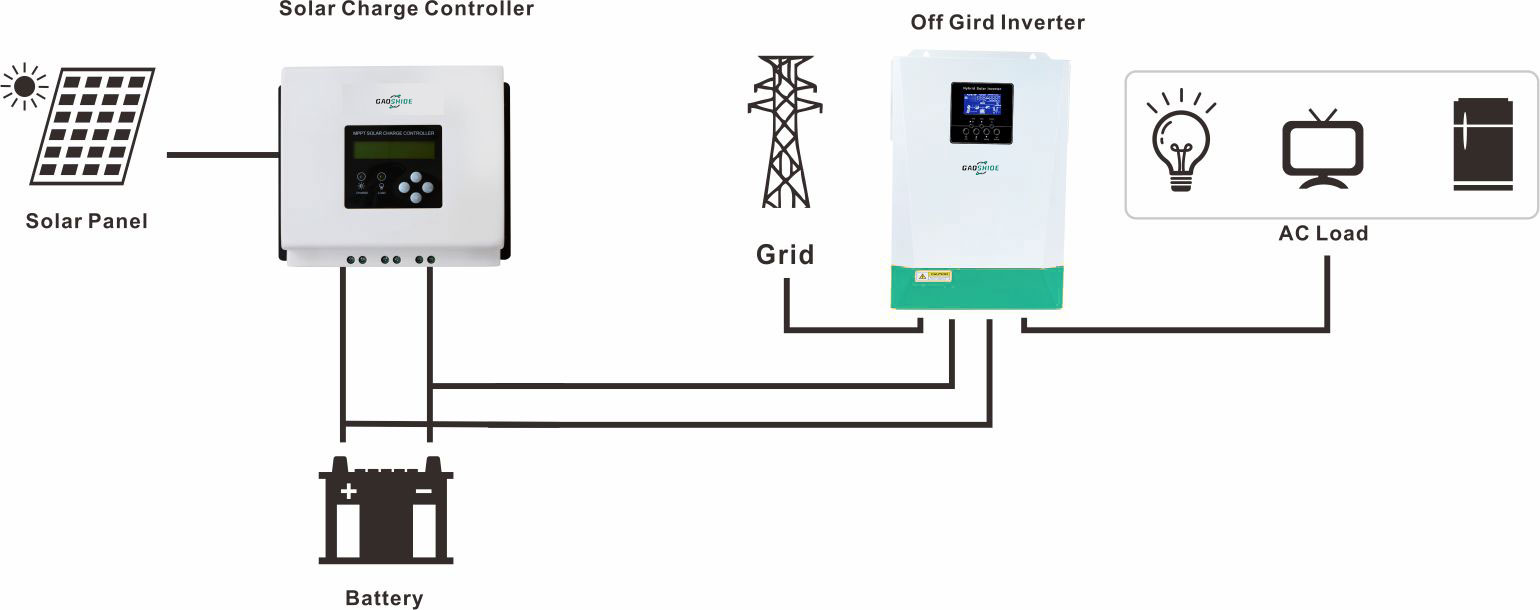
You can choose between residential and industrial grid-tie inverters based on your power needs, the size of your system, and where you plan to put it. Single-phase inverters with smaller power output (3–10 kW) are usually needed for home systems. Three-phase units with higher power output (10 kW–100 kW+) are needed for business systems. The main difference is how the work is distributed, how efficient it needs to be, and how hard it is to integrate. For commercial grid-tie inverter systems, the electricity loads are heavier, and they need more advanced monitoring tools. On the other hand, domestic units are smaller and easier to install. By understanding these basic differences, you can make sure that your solar energy project has the best system performance and lowest costs.
Understanding Grid-Tie Inverters: Residential vs. Commercial Applications
Inverters that are connected to the power grid are very important because they change the direct current electricity from photovoltaic arrays into alternating current power that can be used in regular electrical systems. These devices work with the frequency and voltage of the electric grid to make sure that power is distributed smoothly and safely. They do this by protecting against "islands."
Solar Panel Compatibility and System Integration
Modern grid-tie inverters are very flexible because they can work with a wide range of solar panel systems. These conversion systems work with both monocrystalline and polycrystalline panels without any problems. However, the inverter specifications must match the panel design. In residential installations, strings of 8 to 12 panels are common. In business installations, on the other hand, multiple strings may be spread out over large roof areas or ground-mounted groups.
For both private and business uses, the integration method is very different. Residential systems are designed to be as simple and unobtrusive as possible, and they usually use single-phase lines that work with normal home electrical service. Planning for commercial setups is more complicated because they need to include three-phase power distribution and advanced tracking systems that keep track of how well multiple inverter units are working.
Maximum Power Point Tracking Technology
MPPT technology is a big step forward in optimizing solar energy because it lets inverters get the most power out of solar panels in a variety of weather situations. This complex algorithm constantly changes the electricity load to keep the working voltage at its best. This is especially helpful when there is some shade or when the weather is changing.
Commercial-grade MPPT systems often have more than one tracking channel, which lets different groups of panels in the same location be optimized separately. This feature is very important for big projects where different parts of the solar array may be exposed to different weather conditions at different times of the day. Single or dual MPPT channels are usually used in residential systems, which are enough for smaller setups with even exposure conditions.
Load Profile Considerations
Knowing the load patterns helps you choose the right size inverter for each purpose. Residential energy use usually rises in the morning and evening, with average use in the middle of the day, when solar panels are producing the most energy. Residential grid-tie systems are very efficient because they naturally match up production and usage.
Commercial buildings have more complicated load scenarios, but their daily energy needs are usually steady, which works well with solar output plans. Manufacturing plants, office buildings, and stores all benefit from this synchronization because it makes them less reliant on the power grid during high production hours and lowers their total energy costs by managing demand better.
Criteria for Choosing the Right Grid-Tie Inverter
There are a lot of things that affect system performance and long-term value that need to be carefully looked at when choosing the right grid-tie inverter technology. When buying a grid-tie inverter for a home or a business, the decision-making process is very different because each type of purchase has its own set of goals and success metrics.
Residential Procurement Priorities
Cost-effectiveness is usually the most important thing for residential buyers, who look for inverters that work reliably without being too complicated. Smaller sizes make installation easier in places with limited room, and simple upkeep requirements appeal to homeowners who want to spend little time on their solar systems every day.
Installation ease is a big deal for homeowners, who want fixed solutions that don't get in the way of their daily lives too much. Single-phase inverters work well for most home needs because they can convert power efficiently and are compatible with standard home electrical switches and utility lines.
Commercial and Industrial Requirements
Commercial buying teams look at different factors, putting a lot of weight on how long the system will last and how it can be expanded to meet higher energy needs. For business installs, extended warranty coverage is very important because downtime can cost a lot of money and cause problems with operations. Industrial-grade parts and a strong build make sure that the machine will work reliably in harsh conditions.
Scalability is the idea that economic systems can grow as the needs of businesses change. Modular inverter designs allow for phased installations, which spread out capital costs over several budget cycles while keeping the system running smoothly. Advanced tracking tools give you detailed information about performance that you need to make the best decisions about how to control energy.
Decision Framework Implementation
Using organized decision models makes it easier for procurement workers to choose the right inverter. Power output estimates must take into account both present and expected future energy needs. This makes sure that there is enough capacity without going overboard. This measure is especially important for business uses because it has a direct effect on how well a system works and how much energy it saves over time.
Safety approvals show that the product meets local electrical rules and industry standards. This keeps end users and system installers from having to worry about liability. Different areas have different standards for UL rating, IEC certification, and local utility approval. It is important to check that the right certifications are present during the buying process.
Comparative Analysis: Residential vs. Commercial Grid-Tie Inverters
There are clear differences between household and business inverter uses when it comes to performance characteristics and operational needs. Knowing about these differences helps buying teams choose the right technology while getting the most out of both the original investment and the long-term value of running the business.
Efficiency and Performance Metrics
Because they are bigger and have more modern power electronics, commercial inverter systems usually get better efficiency scores. Peak efficiency ratings for business units usually go over 98%, while ratings for home inverters usually go between 95% and 97%. This difference becomes important over long periods of time, especially for large business installations where small gains in efficiency add up to big energy savings.
When it comes to business settings, where sensitive equipment may need a clean, stable power source, power quality issues become more important. When commercial inverters are used, they have advanced filters and power control features that keep the voltage and frequency stable even when the load changes. Residential units focus on meeting basic power quality standards that are good for common home equipment.
Cost Analysis and Return on Investment
The initial costs of tools are very different for household and business use. Business units are more expensive because they have more features and are built to industrial standards. But business installations often get economies of scale, which means that the cost per watt goes down when the whole system's capability is looked at.
When you figure out the total cost of ownership, you have to include things like expected operating lifespan, insurance coverage, and maintenance costs. Commercial transformers usually have longer useful lives—with proper care, they can last more than 20 years. Residential units usually work well for 10 to 15 years, but because they are smaller, the costs of repair are easier to handle.
Installation and System Complexity
For household and commercial uses, installation standards are very different. Residential installs stress quick deployment with a few specialized tools. Small installation teams can usually finish these jobs in one day. Standard electrical connections and easy mounting methods make installation simpler and lower the cost of work.
For commercial tasks, you need to plan them out more carefully and have more specialized knowledge. Installation takes longer because of three-phase electrical connections, integrating complex tracking systems, grid-tie inverter setup, and working with building management teams. Commercial setups, on the other hand, have their own specialized electrical infrastructure and can get upkeep done by professionals, which lets them use more complex system designs.
Leading Brands and Solutions for Residential and Commercial Buyers
There are a number of well-known companies in the solar inverter market that make products for a variety of customer groups. Knowing the strengths and weaknesses of each brand and where it stands in the market helps buying workers find solutions that meet their needs.
Residential Market Solutions
Leading makers of home inverters focus on making designs that are easy for people to use and install. Homeowners can feel good about their investment with these products because they come in small packages and come with full warranties that cover everything. Residential uses mostly use string inverter technology because it is reliable and doesn't cost much.
Microinverter technology is becoming more popular in home markets where panel-level tuning is useful. Microinverter solutions may be worth the extra money if the roof is complicated, there are problems with partial shade, or the solution looks nice. By lowering the DC power, these systems offer better safety features and more detailed tracking.
Commercial and Industrial Solutions
Commercial-grade inverters have advanced features that make them suitable for large-scale businesses and complex energy management needs. Three-phase designs are better at handling higher power levels while keeping the load spread evenly across all electrical systems. Modular designs make it possible to set up systems in a way that fits the needs of each location.
Advanced communication methods make it possible for energy demand response programs and building control systems to work together. These features allow for tactics like peak shaving, load balancing, and grid services that can help business solar systems make more money. Remote diagnostics and tracking cut down on upkeep costs and increase system uptime.
Market Trends and Technology Evolution
Integration with smart grids and flexibility with energy storage are big trends in the market right now. Grid-tie inverters are getting better at integrating battery systems, which lets you create mixed solar-plus-storage options that make your energy more secure and free from the grid. These features are appealing to both home and business customers who want to be as energy independent as possible.
AI and machine learning technologies improve the performance of inverters by letting them do predictive repair and using automated optimization methods. These improvements lower running costs and make systems more reliable. This is especially helpful for business applications where reliable performance has a direct effect on how the business runs.
Installation, Safety, and Maintenance Best Practices
Proper installation and ongoing upkeep protect system investments and make sure that grid-tie inverters work at their best. Best practices are different for residential and business uses because of the amount of complexity and the needs of the operation.
Residential Installation Considerations
When installing systems in homes, safety and code compliance are given top priority, along with causing as little damage as possible to daily life. The choice of location must take into account how easy it is to do upkeep, how the area looks, and how well it manages temperature. Enough airflow keeps things from getting too hot, and keeping them out of the weather increases their durability.
Electrical links need to follow strict safety rules, such as using the right grounding methods and preventing arc faults, as required by current electrical codes. Installing a string inverter usually includes both DC disconnect switches and AC disconnect features that make servicing safe. Labels and records that are easy to read help with future upkeep tasks and emergency reaction needs.
Commercial Safety Protocols
Because they are bigger and use more power, commercial sites need a lot of safety planning. Electrical dangers, fall protection, and working with other building operations must all be covered in work site safety rules. For business solar systems, professional assembly teams need to have special training and be certified.
Some things that need to be thought about for electrical safety are correct grounding systems, surge protection, and following industrial electrical standards. Three-phase systems need to be loaded evenly and have the right safety devices to keep people and equipment from getting damaged. Emergency stop plans must work with the building's safety systems and give repair staff clear instructions.
Proactive Maintenance Strategies
Regular repair plans extend the life of inverters and cut down on unplanned downtime. Visual checks find problems before they become system failures, and performance tracking looks for changes in efficiency that could mean problems are starting to form. Cleaning gets rid of dust and other particles that can affect how well heat is managed and how well the system works overall.
Predictive maintenance methods that use performance data and diagnostic tools to plan repair tasks ahead of time are helpful for commercial systems. These methods raise system availability while lowering upkeep costs. This is especially important for business settings where energy production has a direct effect on running costs.
Conclusion
When choosing the right grid-tie inverter, you need to carefully think about the needs of your application, the results you expect, and your long-term operating goals. Single-phase systems that focus on ease and dependability are often the most cost-effective and best for residential use. For commercial use, three-phase systems need to be more advanced, with better tracking tools and an industrial-grade building. By knowing these basic differences, you can make smart purchasing choices that protect both your initial investment and the system's long-term performance. This makes sure that solar energy projects in both the household and business sectors are successful.
FAQ
1. What are the main differences between residential and commercial grid-tie inverters?
Residential inverters are made for smaller solar setups and regular home electrical systems. They usually have a single-phase output with power levels between 3 kW and 10 kW. The output of commercial inverters is three-phase and has higher power ratings (10 kW to 100 kW+). They have advanced monitoring features and industrial-grade parts to support bigger activities and more demanding electrical settings.
2. How long do grid-tie inverters typically last in commercial applications?
If you keep commercial grid-tie transformers in good shape and use them in the right way, they should last between 15 and 25 years. The longer operating life compared to residential units is due to industrial-grade parts and a strong building. Professional service support and regular repair plans extend the life of equipment and make sure it works well throughout its operational time.
3. Are grid-tie inverters compatible with all types of solar panels?
These days, modern grid-tie inverters work well with many types of solar panels, such as monocrystalline, polycrystalline, and thin-film panels. But for a system to work right, the inverter's specs need to match the panel's voltage and current specs. Different types of panels can be optimized with MPPT technology, but the voltage and power ranges must match the inverter's input specs for the best performance.
Partner with Gaoshide for Your Grid-Tie Inverter Solutions
Gaoshide New Energy Technology offers complete solar power system options backed by a lot of technical know-how and a track record of success in both home and business settings. Our cutting-edge grid-tie inverter technology includes advanced MPPT algorithms, strong safety features, and a range of customization choices that can be used for a wide range of projects. As a reliable Grid-tie Inverter manufacturer, we offer full system integration support, from the initial meeting to installation and ongoing upkeep. Our expert team can help you choose the best inverter for your needs, making sure that you get the most energy-efficient and reliable system over time. Contact our experts at admin@gaoside.com to talk about your specific needs and find out how our cutting-edge solutions can help you get the most out of your solar energy investment at a price you can afford and with great customer service after the sale.
References
1. National Renewable Energy Laboratory. "Grid-Connected Solar Photovoltaic System Design Guidelines for Residential and Commercial Applications." Technical Report NREL/TP-5400-68676, 2019.
2. International Energy Agency. "Trends in Photovoltaic Applications: Survey Report of Selected IEA Countries between 1992 and 2023." IEA Photovoltaic Power Systems Programme, 2024.
3. Institute of Electrical and Electronics Engineers. "IEEE Standard for Interconnection and Interoperability of Distributed Energy Resources with Associated Electric Power Systems Interfaces." IEEE Std 1547-2018, 2018.
4. Solar Power International. "Commercial vs. Residential Solar Inverter Performance Analysis: A Comprehensive Study of Grid-Tie Technologies." Solar Industry Research Report, 2023.
5. Sandia National Laboratories. "Performance and Reliability Assessment of Grid-Connected Photovoltaic Inverter Systems." Technical Report SAND2023-14567, 2023.
6. Clean Energy Council. "Grid-Connect Solar PV Systems: Installation and Safety Guidelines for Residential and Commercial Applications." Australian Solar Installation Standards, 2024.
YOU MAY LIKE